
Can Chiropractic Improve Posture and Neck Pain?
Written by Dr. Mariah and Dr. Sam, Doctors of Chiropractic | The Kingdom Chiropractic, Fishers, IN
Reviewed by Dr. Sam, D.C. | Last updated: October 2026
Can Chiropractic Treatment Improve Posture and Alleviate Neck Pain?
Yes, chiropractic treatment can improve posture and help alleviate neck pain for many people. Research supports spinal manipulation for mechanical neck pain, and correcting cervical alignment can reduce the strain driving postural problems. But results vary by person, timelines are measured in weeks or months rather than days, and chiropractic is not the right answer for every cause of neck pain.
That's the honest version. Now here's what's actually happening in your neck, what care realistically involves, and how to tell whether your symptoms point to chiropractic care or to a physician first. We're Dr. Mariah and Dr. Sam at The Kingdom Chiropractic in Fishers, IN, and this is the conversation we have with patients every week, especially this time of year as outdoor activity drops and desk hours climb.
Why Posture and Neck Pain Are the Same Problem
Most people treat these as separate issues. They aren't.
Your head weighs roughly 10 to 12 pounds when it sits balanced over your shoulders. Tilt it forward to look at a laptop or phone, and the effective load on your neck multiplies. At a 45-degree forward tilt, the muscles and joints of your cervical spine are managing something closer to 45 or 50 pounds.
Your body adapts to that load. Muscles in the back of the neck shorten and tighten. Chest muscles pull the shoulders forward. The upper back rounds to compensate. Over months and years, this becomes your resting posture rather than a position you consciously hold.
The pain follows the posture. Chronic muscular strain, joint restriction, and nerve irritation all stem from the same structural problem. Which is why treating neck pain without addressing posture tends to produce temporary relief at best.
The Cleveland Clinic notes that prolonged forward head posture from device use contributes significantly to neck pain, upper back tension, and headaches.
The Mechanism: Forward Head Posture and Cervical Subluxation
Here's where chiropractic care enters the picture.
When sustained postural load alters cervical alignment, individual vertebrae can lose proper position and motion. In chiropractic terms, this is a subluxation: a misalignment that interferes with normal nerve communication.
Your cervical spine houses the upper portion of your spinal cord and the nerve roots serving your head, neck, shoulders, and arms. Restriction and misalignment here can contribute to local pain, referred headaches, reduced range of motion, and sometimes numbness or tingling radiating into the arm.
Correcting cervical subluxation is intended to restore proper joint motion and reduce that interference. That's the structural half of the equation. The muscular half (shortened, tightened tissue holding the bad position) takes longer and requires your participation through exercise and habit change.
This is what we mean by healing at the source. Our resource on the role of your nervous system in chiropractic care explains the brain-body relationship in more detail, and our phases of degeneration page shows how postural misalignment progresses when left uncorrected.
What Chiropractic Care Can Realistically Do
Let's be specific rather than promotional.
- Reduce mechanical neck pain. Spinal manipulation has reasonable evidence behind it for mechanical neck pain, meaning pain arising from joint and muscle dysfunction rather than disease or injury.
- Restore range of motion. Joint restriction often responds well. Many patients notice improved mobility relatively early in care.
- Reduce cervicogenic headaches. Headaches originating in the neck frequently improve when cervical alignment and motion improve.
- Support postural correction. Adjustments address the structural component. Combined with exercise and ergonomic change, posture can measurably improve.
- Slow further decline. Addressing misalignment early tends to produce better outcomes than waiting until the pattern is deeply established.
What chiropractic cannot do: reverse decades of structural change overnight, eliminate pain permanently without maintaining the habits that caused it, or correct posture while you continue spending nine hours a day hunched over a screen with no changes. We'll say that plainly at your first visit.
Realistic Timelines, Not Marketing Promises
This is the question we get most, and the one most often answered dishonestly.
First few visits: Many patients report reduced tension and improved mobility. Some feel mild soreness after initial adjustments, similar to starting a new exercise routine.
Two to six weeks: With consistent care, mechanical neck pain often improves meaningfully in this window. Headache frequency may decrease.
Two to six months: Measurable postural change typically takes this long, because you're retraining soft tissue and movement habits, not just repositioning joints. The longer the pattern has existed, the longer correction takes.
Ongoing: Once the spine stabilizes, visit frequency decreases substantially. Posture maintenance depends largely on what you do at your desk and on your phone.
Anyone promising permanent correction in a handful of visits is overselling. Anyone telling you you'll need weekly visits forever is also overselling, in the other direction. Honest care tapers.
When Neck Pain Needs a Physician, Not a Chiropractor
This section matters, and we'd rather you read it than skip to booking.
Seek medical evaluation rather than starting chiropractic care if you have:
- Neck pain following significant trauma such as a car accident or fall, before imaging has been done.
- Progressive weakness, numbness, or loss of coordination in an arm or hand.
- Sudden, severe headache unlike any you've experienced.
- Neck pain with fever, unexplained weight loss, or night sweats.
- Loss of bowel or bladder control.
- Neck stiffness that prevents you from touching chin to chest, particularly with fever.
- A history of cancer, osteoporosis, or inflammatory arthritis alongside new neck pain.
The National Institutes of Health provides guidance on neck pain presentations requiring prompt medical assessment.
If you present with any of these at our Fishers office, we will refer you out rather than adjust you. Chiropractic care complements medical care; it does not replace it. We also screen for these at every initial assessment, which is why we never adjust before we assess.
Chiropractic, Massage, or Both?
A fair question with a non-promotional answer.
Massage therapy addresses soft tissue: muscle tension, trigger points, fascial restriction. It often feels excellent and provides real relief, but it doesn't change joint position or motion.
Chiropractic addresses the joints and the nervous system: restoring motion to restricted segments and reducing nerve interference.
For posture-driven neck pain, the two are genuinely complementary. The joints hold the structure; the muscles hold the pattern. Many patients do best with chiropractic care as the structural foundation and massage as supportive soft-tissue work. If your neck pain is purely muscular tension from a stressful week, massage alone may be plenty. If it recurs in the same place month after month, there's likely a structural component worth assessing.
What Postural Assessment Looks Like at Our Fishers Office
When a patient comes in for neck pain and posture concerns, here's what happens.
Dr. Mariah or Dr. Sam begins with a detailed history: how long, what makes it worse, your work setup, your sleep position, your device habits, and any prior injuries. We screen for the red flags listed above.
Then a postural evaluation: head position relative to shoulders, shoulder height and rotation, upper back curvature. We test cervical range of motion in each direction and palpate segment by segment to identify where motion is restricted.
You'll get a report of findings explaining what we found, what we'd recommend, and roughly how long it should take. If we don't think chiropractic will help your particular presentation, we'll tell you.
Our What To Expect page walks through the full first-visit process, and you can see our complete range of care on our Chiropractic Services page.
Desk Season: Why Fall Makes This Worse
There's a reason neck pain complaints rise in our Fishers office this time of year.
Outdoor activity drops. Screen time climbs. Movement breaks disappear as people settle into longer indoor stretches. Cold weather increases muscle guarding. Holiday workload adds stress, which adds tension to already-strained tissue.
If your neck has been bothering you since the weather turned, that's not coincidence. It's also the easiest time to intervene, before the pattern settles in for the winter.
Three things worth doing regardless of whether you book with us: raise your screen to eye level, take a standing break every hour, and stop looking down at your phone by holding it up instead.
Visit Our Fishers Chiropractic Office
Our office is conveniently located along the 96th Street corridor, easily accessible from anywhere in Fishers, Indiana.
The Kingdom Chiropractic
8924 E 96th Street
Fishers, IN 46037
Phone: (317) 588-9414
Office Hours:
- Monday: 9:30am-12pm, 3-6pm
- Tuesday: 8:30-11:30am
- Wednesday: 9:30am-12pm, 3-6pm
- Thursday: 3-6pm
- Friday-Sunday: Closed
Find Out What's Actually Causing Your Neck Pain
If your neck has been bothering you and you want a straight assessment rather than a sales pitch, come in and find out what's going on.
Our $49 New Patient Special covers a thorough consultation, a complete postural and cervical assessment, and a clear report of findings. You'll learn what we found, what we'd recommend, and a realistic timeline. If your presentation warrants medical evaluation first, we'll tell you that instead.
Fall is the right time to address this, before desk season locks the pattern in for winter.
📞 Call us today at (317) 588-9414
📍 Visit us at 8924 E 96th Street, Fishers, IN 46037
🌐 Book your appointment online
Frequently Asked Questions
How long does it take to fix posture with chiropractic care?
Measurable postural change typically takes two to six months. Joints can be repositioned relatively quickly, but retraining the soft tissue and movement habits holding the old pattern takes longer. The longer the posture has existed, the longer correction takes, and results depend heavily on ergonomic and habit changes between visits.
How many chiropractic sessions do I need for neck pain?
It varies by cause and duration. Mechanical neck pain often improves meaningfully within two to six weeks of consistent care. Your report of findings will include a specific estimate based on your assessment. Visit frequency should decrease as the spine stabilizes, not continue indefinitely at the same rate.
Is chiropractic or massage better for neck pain?
They address different things and work well together. Massage treats soft tissue tension; chiropractic treats joint motion and nerve interference. If your pain is purely muscular from a stressful week, massage may be enough. If it recurs in the same place repeatedly, there's likely a structural component worth assessing.
Can a chiropractor help neck pain permanently?
Chiropractic care can produce lasting improvement, but permanence depends on maintaining the conditions that allow it. If the posture and habits that caused the problem return, so will the pain. We'd rather set honest expectations than promise a permanent fix that depends on factors outside the treatment room.
Can chiropractic fix forward head posture?
Chiropractic addresses the structural component by restoring cervical alignment and joint motion. Full correction also requires strengthening exercises, ergonomic changes, and reduced device strain. Adjustments alone, without habit change, will produce limited results.
When should I see a doctor instead of a chiropractor for neck pain?
Seek medical evaluation first for neck pain after significant trauma, progressive weakness or numbness in an arm, sudden severe headache, neck pain with fever or unexplained weight loss, or loss of bowel or bladder control. We screen for these at every initial assessment and refer out when appropriate.
Does insurance cover chiropractic care for neck pain?
Many plans include chiropractic benefits, though coverage varies by plan, visit limits, and network status. HSA and FSA funds can typically be applied. We're happy to help you understand your benefits when you book.
Ready to Experience Better Health?
Take the first step towards optimal wellness with personalized chiropractic care at The Kingdom Chiropractic.
Related Articles
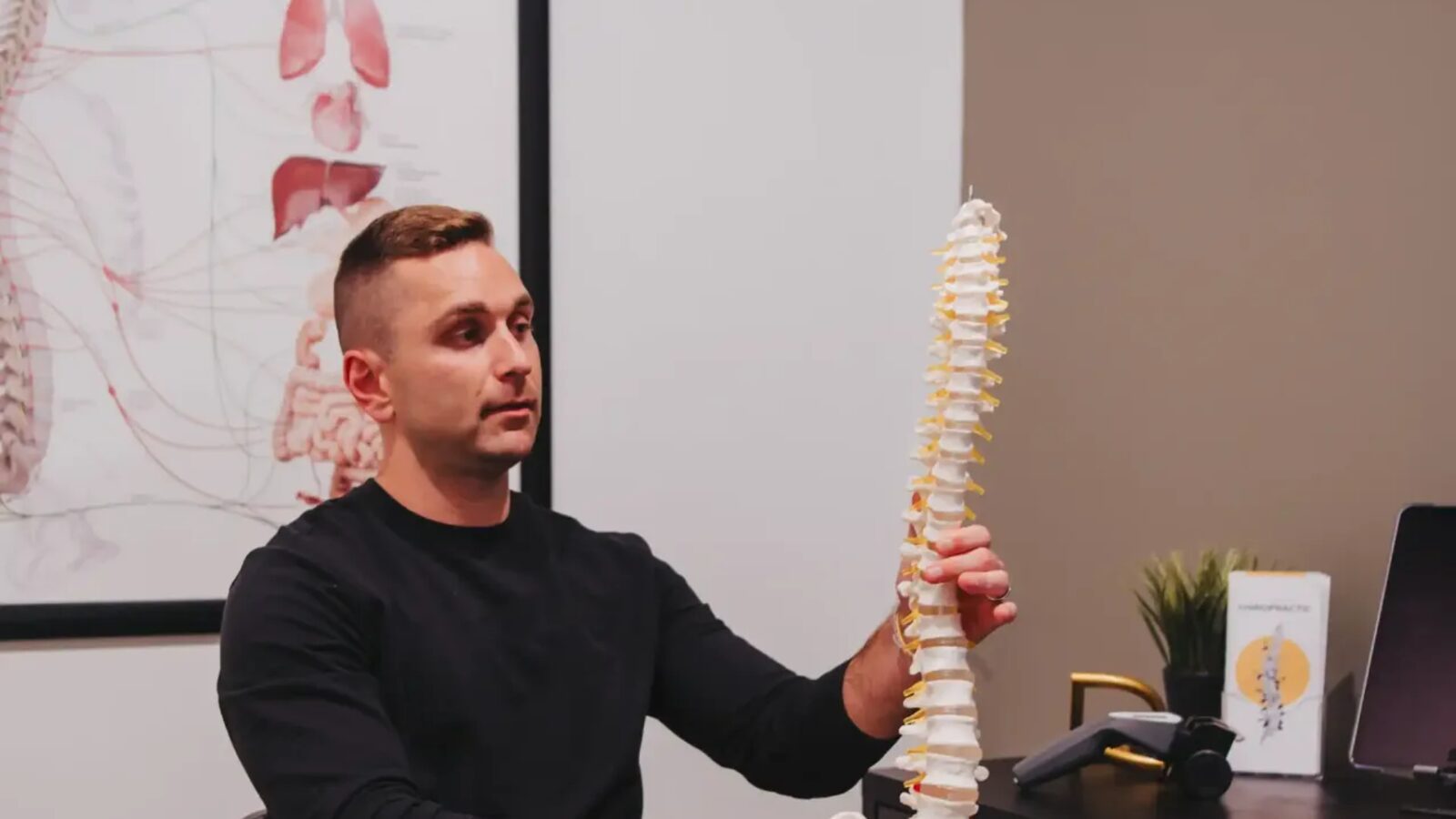
7 Posture Correction Exercises You Can Do at Home
7 posture correction exercises a Fishers chiropractor actually prescribes. Clear form cues, reps, and who should skip each one.
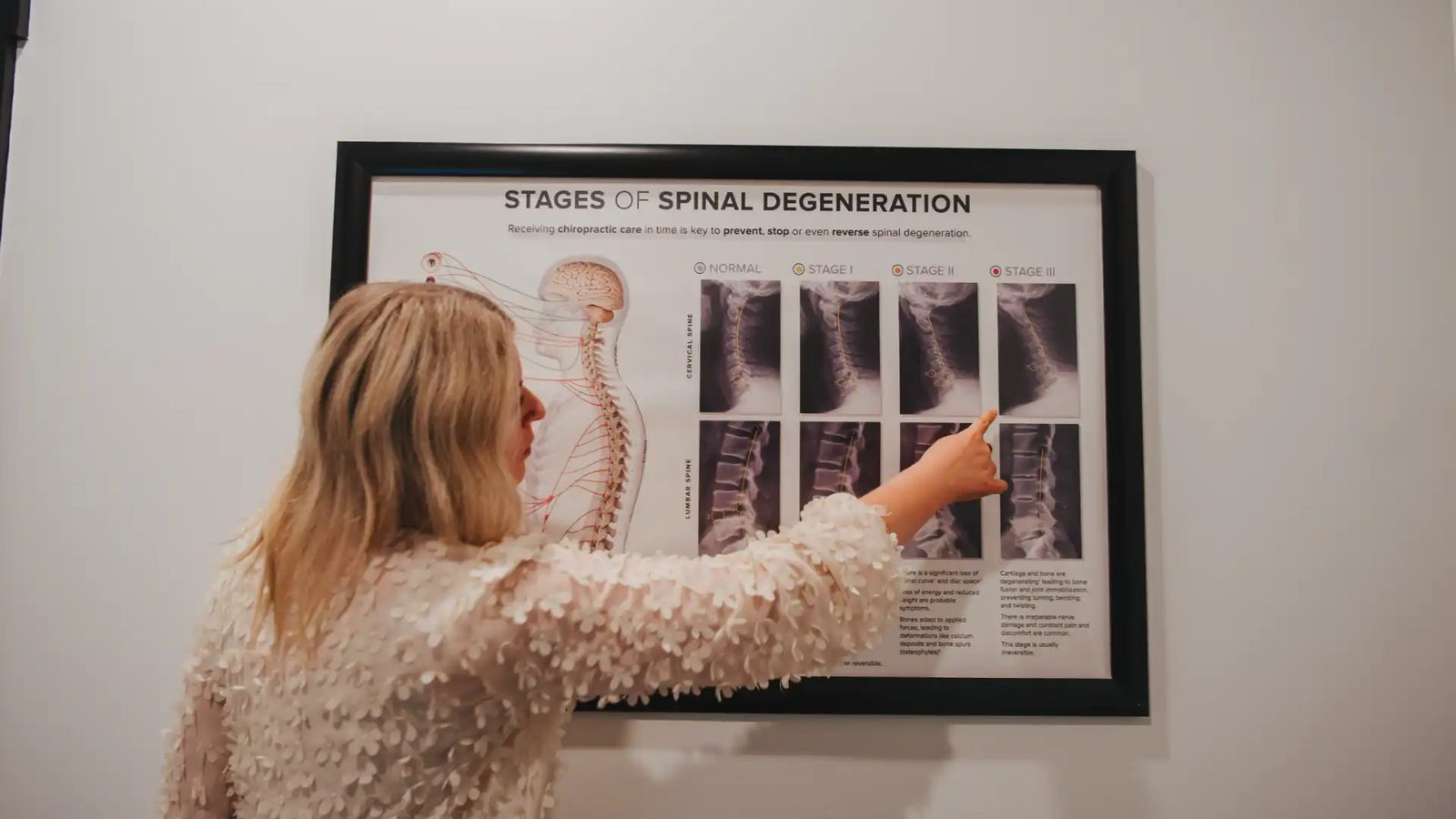
What Does a Chiropractor Do?
What does a chiropractor do? A Fishers doctor explains training, scope of care, what we treat, and what we don't. Book your visit today.

5 Signs You Need Spine Alignment Care from a Fishers Chiropractor
Aching after an active summer? Discover 5 signs you may need spine alignment care from a trusted Fishers chiropractor. Book today.